Surface racial harmony
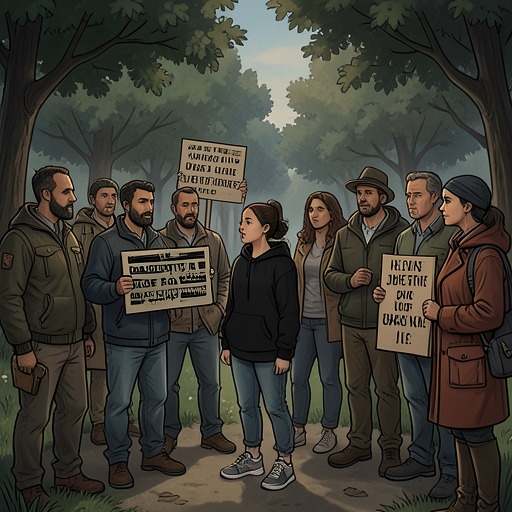
I'm Still HereSurface racial harmony is the appearance of racial peace created by an absence of overt conflict, not proof that bias or unequal power has disappeared. In Austin’s account, harmony can make prejudice harder to see: amicable interactions and public commitments to diversity coexist with stereotypes, unexamined assumptions, and institutions that expect Black people to adapt to white norms.
Harmony and the Unseen Classroom
At Austin’s predominantly white Catholic high school, students of color were numerous enough to fill several lunch tables, form a gospel choir, and make their presence felt. She remembers no major racial incidents during her four years there: no swastikas, race-prompted fistfights, blackface parties, or inappropriate Halloween costumes. The school seemed harmonious because open hostility was largely absent. Yet that appearance did not resolve what teachers might privately assume about Black students.
A seating-chart discussion with Ms. Phillips made the gap visible. Ms. Phillips recognized that she had treated disruptive Black students differently: behavior she would not have attributed to the race of white students became, when Black students were involved, a defining factor. The admission unsettled Austin. She had thought highly of her teacher and had not expected a stereotype about disrespectful Black girls to shape how Ms. Phillips saw her. The other students appeared mostly relieved that they could sit where they wished; Austin instead wondered whether the teacher’s new awareness made her safer, and whether other teachers were silently judging her too.
That realization altered Austin’s understanding of her school. She was grateful not to face overt racism, but could no longer take friendly interactions as evidence that bias was absent. The apparent unity had left the assumptions of people with authority largely undisturbed. A lack of confrontation, she concluded, could preserve the very beliefs that made unequal treatment possible.
The Cost of Naming Bias
Austin responded by asserting greater agency over her education. In a predominantly white curriculum, she chose Black authors for book reports and Black history for assignments when she could. Schoolwork could require a choice between a better grade and affirming Blackness: she might correct the claim that Christopher Columbus discovered already inhabited land, or frame an answer as what the textbook stated. She sometimes gave teachers the answer they wanted with a qualification, knowing that telling the fuller truth could cost her half a letter grade. Her choices show how a seemingly calm school environment could leave the work of representation and correction to the students it underrepresented.
The same pattern appears in Austin’s professional experience. In job interviews, a room expecting a white man could change visibly when a Black woman appeared; afterward, the unspoken concern was whether she would fit the organization’s white culture. New employees might be promised a safe person to approach and told stories about past mistakes that had supposedly been addressed. Yet early encounters could include comments on Austin’s hair, surprise at her articulateness, requests to speak more Black, and assumptions that she could speak for Black people on subjects such as single motherhood or crime.
When Austin reported such incidents, the designated confidante might suggest she had misunderstood or urge her to be more patient with the person responsible. Austin tried to redirect attention from individual bad actors to white leadership, hiring practices, and organizational culture. That broader analysis could earn her labels such as divisive, negative, or toxic. The organization could thus present itself as welcoming while assigning the burden of explaining harm—and then managing white discomfort about that explanation—to the Black employee.
Unity, Diversity, and Assimilation
The contradiction also surfaced in a board discussion about a racial-diversity training program Austin sought to establish less than a year into her job. The treasurer questioned why an organization should resist assimilation, treating the absorption of diverse people into a unified organizational culture as the purpose of inclusion. Austin froze: the person questioning her proposal controlled its approval, and the unity being praised seemed to require her colleagues of color to surrender differences of thought and culture.
The episode exposed the distance between a public commitment to diversity and a willingness to share power. An organization may welcome visible racial variety while resisting the influence of people of color over its culture, priorities, and decisions. Austin’s account therefore distinguishes inclusion in numbers from meaningful participation: without authority over direction and vision, diversity can leave the underlying structure unchanged. Surface harmony is maintained not only by silence about individual bias but also by treating assimilation as a neutral route to unity.
Historical Continuity and the Work of Reconciliation
Austin places these everyday and institutional patterns against a national history often softened by reassuring narratives. She argues that slavery and mass incarceration were purposeful systems, while public accounts frequently avoid the history connecting slavery, the Civil War, the rise of Jim Crow, and continuing beliefs in Black inferiority. Sanitized accounts reduce Jim Crow to segregated signs and fountains, eliding economic dispossession, routine humiliation, mob violence, bombed churches and businesses, and lynching. Celebrations of the Civil Rights Movement can likewise emphasize its victories while obscuring the violence and resistance that preceded them.
The same tension shapes accounts of the present. Watching police in Ferguson confront Black residents with riot gear, dogs, tear gas, and tanks, Austin recognized not a clean break from the past but a changed form of coercion. The contrast between historical images of mounted officers and contemporary police with tanks and automatic rifles made claims of racial progress inadequate on their own. In her analysis, racism has not simply vanished; its forms have changed while its effects endure.
For Austin, dialogue is not reconciliation if listening to people of color becomes the final act rather than the beginning of change. Conversations can be managed through tone policing, shifting attention from the harm described to whether the speaker is sufficiently gracious. Reconciliation requires action that pursues justice and changes power, not merely the appearance of agreement. Surface racial harmony is therefore both a social condition and a warning: peace that depends on silence, assimilation, or comforting versions of history leaves the underlying inequity intact.